Something to think through later:
There are challenges at every level:
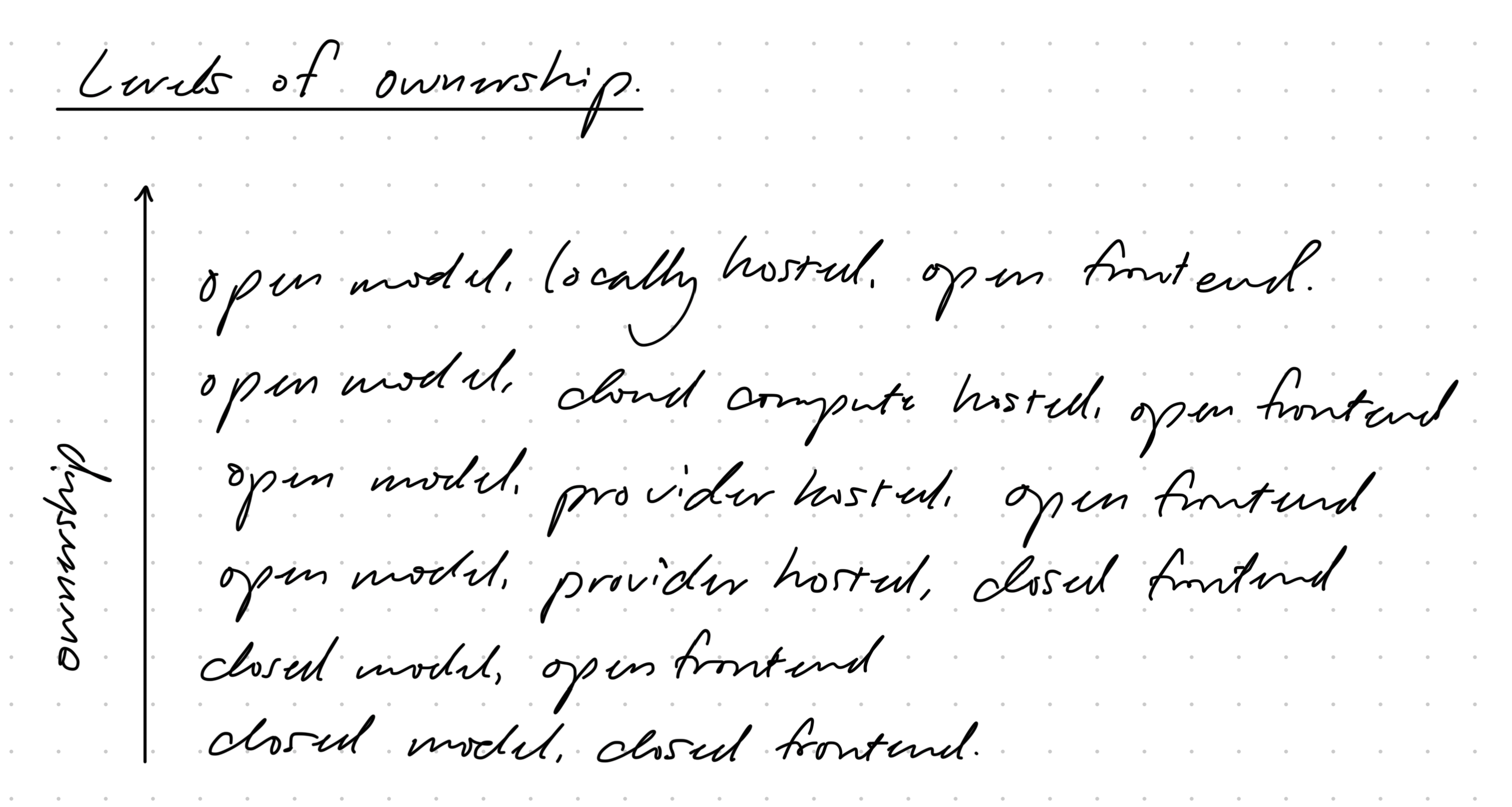
Most importantly: I want to make sure that people know meaningful (what does meaningful mean?) collaboration and innovation occurs with open-weight models. (See Dario Amodei’s weak argument for closed models) (cafeful with cherrypicking!!)
- I want to tell people in the “defining openness in AI” space how users of open AI systems define openness.
- The purist: equate open source to replicability and demand full openness across model components.
- The critic: scrutinize the shoehorning of open source into AI components.
- The pragmatist: valuing what is shared, however limited, and focusing on the tangible utility partial openness can enable.
- The point: the purist and critic group reflect similar positions that existing literature on openness in AI have explored, but the pragmatist group reveals the motivations behind much of the activity in r/LocalLLaMA, and a valuable perspective that hasn’t been surfaced.
- I want to inform people what unique advantages and disadvantages exist for open AI systems.
- Local inference
- Full privacy
- Reliability
- Transparency
- Offline access
- One-time investment over recurring fees
- Greater flexibility in experimentation
- Modifiable model internals
- “Uncensored models”
- Can be used as a learning experience
- Deterrents
- Sharp learning curve to set up open models
- Inferior model performance
- The point: much of the above are possible with just open weights and basic documentation of the model architecture. Not only can you do things like fine-tuning without any worries about restriction, but at a fundamental level, visibility to the architecture provides lots of advantages. Deterrents exist, but are quickly diminishing (not sure if I want to make this point).
- Local inference
- I want to show how innovation and collaboration happens around open AI systems within the context of this Reddit community and the shared repositories on it.
- Getting models to run on a variety of hardware
- Crowdsourcing evaluations of derivative model performance
- As a space for sharing knowledge and peer education