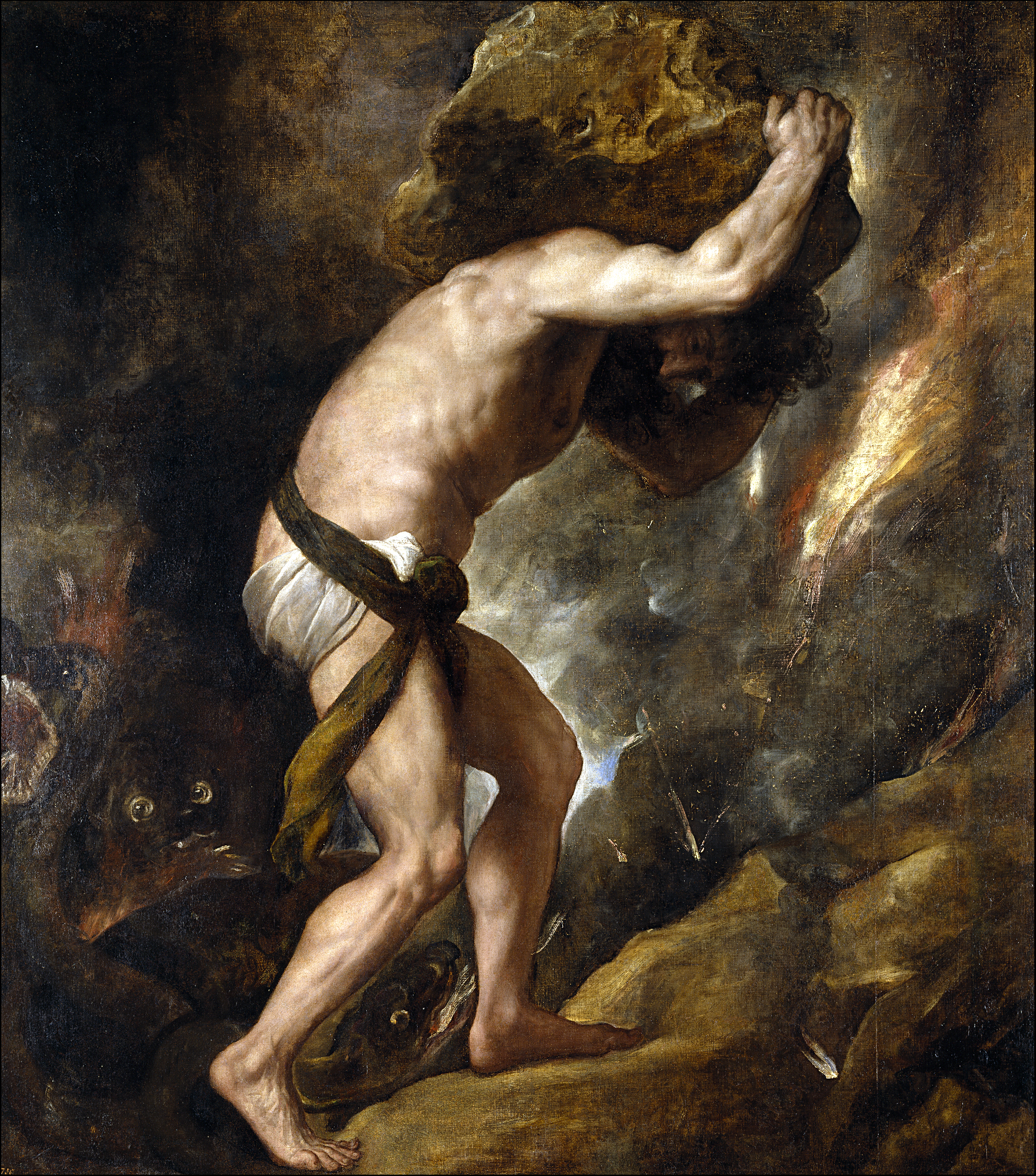
Camus says something really interesting regarding sin and absurdism in his book, The Myth of Sisyphus.
Nothing more profound, for example, than Kierkegaard’s view according to which despair is not a fact but a state: the very state of sin. For sin is what alienates from God. The absurd, which is the metaphysical state of the conscious man, does not lead to God. Perhaps this notion will become clearer if I risk this shocking statement: the absurd is sin without God.
Sin is very often used as an implication for God. If sin exists, God must exist to forgive the sin. But the jump from the existence of sin (let’s assume this for a moment), to the existence of God as curer, is one worth contemplation.
Borrowing from the Bible, the sin that started it all was eating from the tree of knowledge of good and evil. In other words, sin is the thirst for knowledge, and our inability to fully quench it. We decided to use our free will towards a path that guarantees suffering, because we chose not to accept a prescribed good, and a prescribed bad (from God).
Suffering is guaranteed, because the human condition is absurd. As a low-hanging fruit example, Hitler committed to the genocide of Jews believing it was a good thing, because he believed in ethnic cleansing to keep the biological hygiene of the Aryan race. Believing such a thing is absurd, and perhaps, “sinful”.
In the face of the potential for our absurd condition to be so cruel, it is perhaps natural for us to feel despair. And this state of despair is often what motivates the venerable leap of faith, in hope that a superhuman being can indeed save us. Camus calls this philosophical suicide—escaping the absurd by adopting a comforting, transcendent belief system that denies the meaninglessness of existence.
When you make a commitment to that despair however, you save yourself the need to take a leap of faith. You can indeed simply exist in the despair, in the lived experience of absurdity. But you still have the chance to assert your autonomy over absurdity; because accepting absurdity is akin to rejecting the idea that life has a predetermined meaning, you get a (literally) once in a lifetime chance to define what that means for you.
For me, “I rebel, therefore I am” speaks to me in greater volumes than “I think, therefore I am.”