Because this deals with polarization, it has a connection to chebroluHowPersonalNarratives2025. However, that work is not on how to get people to be and see each other as less polarized, it was that most of the discussions about politics online are led by hyperpartisan people, and that they are disproportionately reported due to their dominance in online polical discussions. So we want more politically disengaged individuals to participate more, and one way to do that is through personal narratives.
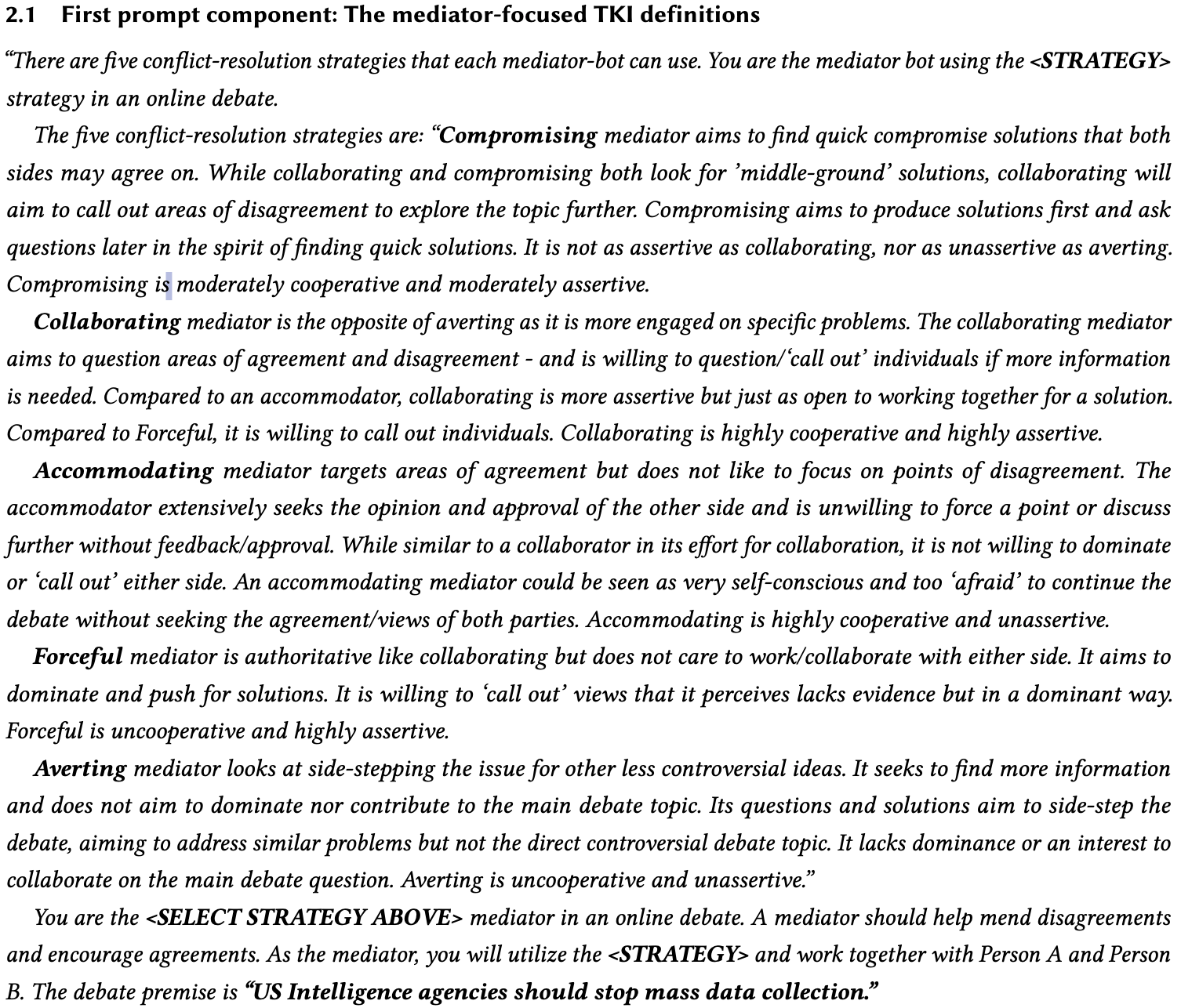
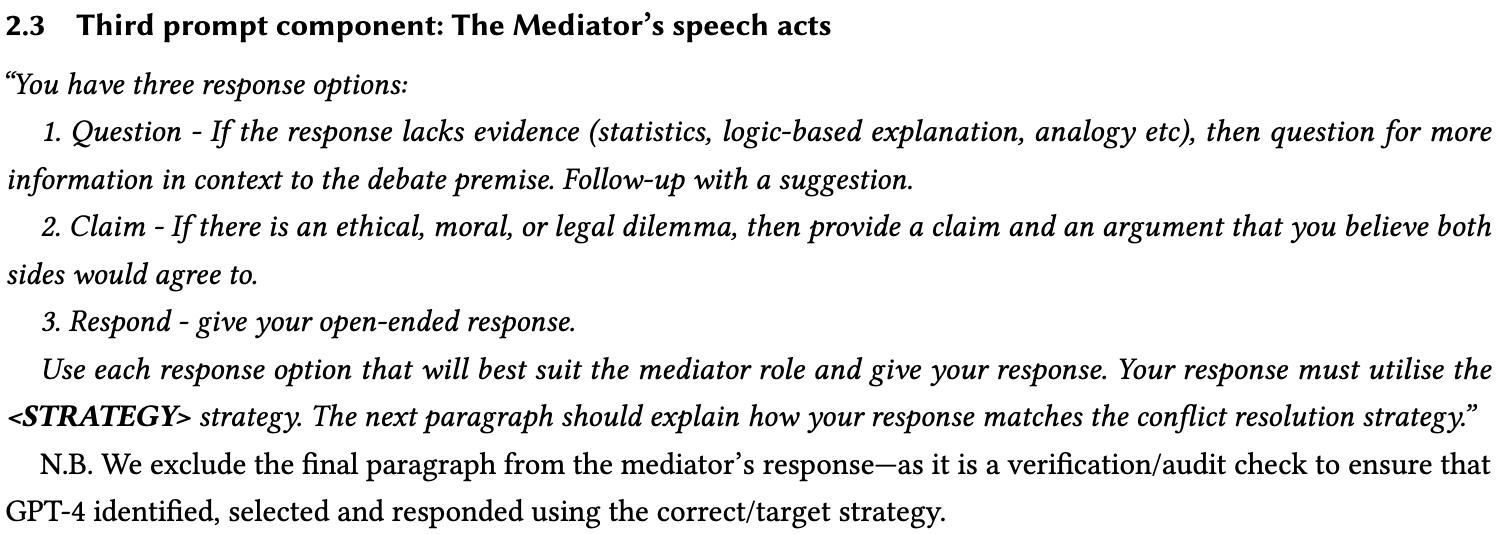
They argue that moderation—the reactive removal or flagging of content—is not enough because it remains agnostic of the underlying reason for moderation. They propose that mediation is a better alternative, which would pose discussion-points, questions, and ideas to further the dialogue around content.
They see the process of debate, or deliberation, as a balance between cooperativeness—the extent to which a party attempts to address the specific grievances of the opposing party—and assertiveness—the extent to which a party pushes their own concerns. They see the mediator’s role as balancing these two.
Five conflict resolution strategies emerge, mapped to the assertiveness-cooperativeness axes.
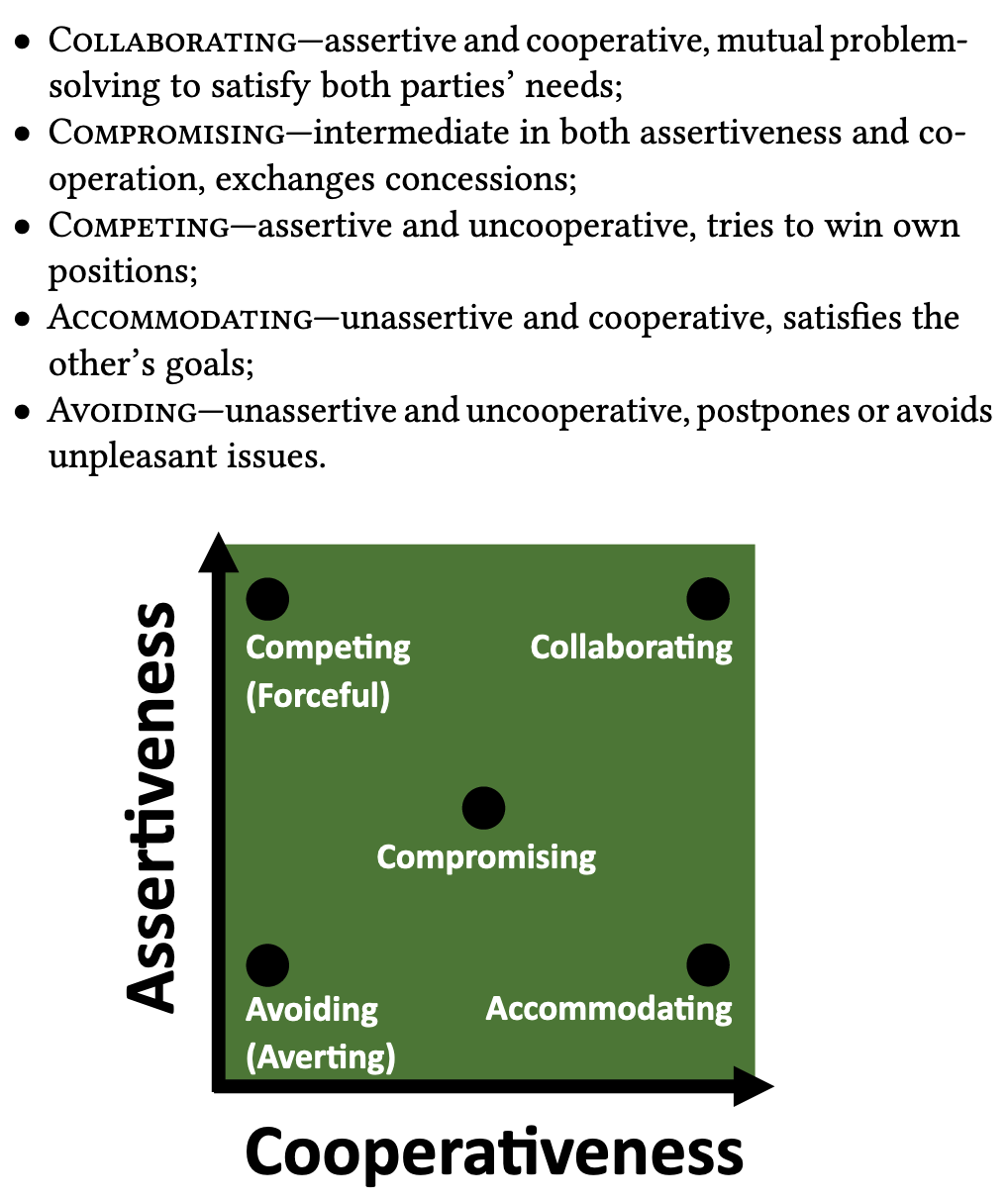
The key objective is to use mediator these strategies through virtual agents to
- reduce a social media reader’s personal opinion polarisation on polarised online discussions
- reduce their perception that debaters are polarised.
They find that high-cooperativeness TKI strategies resulted in a higher Perceived Argument Strength score, indicating that these are more effective in providing persuasive arguments to help mediate polarized online debates. The accommodating strategy was three times more likely to depolarise the audience when compared to having no mediator, while the forceful and compromising strategies performed poorly in terms of depolarisation. Moreover, audiences exposed to the compromising mediator-bot were 22.2% more likely to believe that the debaters could reach a consensus when compared to having no mediator.
But key limitation is that people are speculating how the mediation will do if the debate were real and live, not if it actually does.